
Jambukeswarar Temple, Trichy – Timings, Water Lingam & Travel Guide
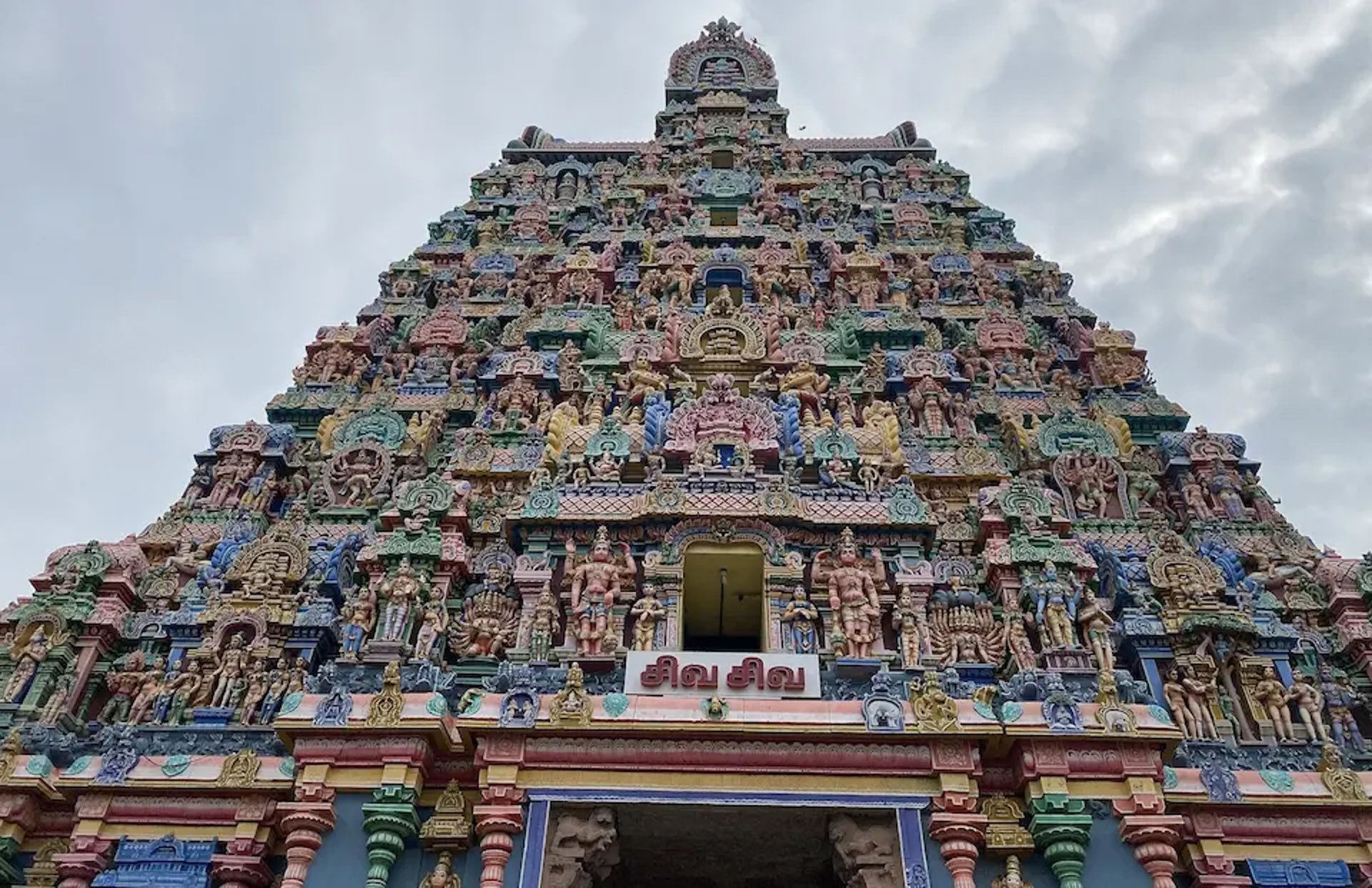
Jambukeswarar Temple, Thiruvanaikaval – Timing, History & Travel Guide
A sacred Pancha Bhoota temple where water eternally flows beneath the Shiva Lingam.
Image by Vinayaraj via Wikimedia Commons, licensed under CC BY-SA 4.0
Jambukeswarar Temple Thiruvanaikaval – Sacred Water Shrine of Lord Shiva
The Jambukeswarar Temple at Thiruvanaikaval, near Tiruchirappalli (Trichy), Tamil Nadu, is one of the most sacred Shaivite temples in South India. Dedicated to Lord Shiva as Jambukeswarar (Appu Lingam) and Goddess Akilandeswari, the temple is revered as one of the Pancha Bhoota Sthalams, representing the element of water.
What makes this temple truly extraordinary is the natural underground spring that continuously surrounds the Shiva Lingam, a mystical phenomenon rarely seen in Indian temple traditions.
Located just 3 km from the famous Sri Ranganathaswamy Temple↗, Jambukeswarar Temple is not only a masterpiece of Dravidian architecture but also a deeply spiritual place filled with legends, rituals, and centuries of devotion.
In this guide, you’ll discover the temple timings, history, significance, and travel tips for visiting one of Tamil Nadu’s most fascinating temples.
Updated on: 12th, Sept 2025
Explored on: June' 2025
Table of Contents
Legends of Jambukeswarar Temple
Timing & Visiting Information
How to Reach Jambukeswarar Temple
History of Jambukeswarar Temple
How to Reach Jambukeswarar Temple in Trichy
Jambukeswarar Temple is located in Thiruvanaikaval near Tiruchirappalli (Trichy), Tamil Nadu, and is well connected by road, rail, and air. The temple lies very close to the famous Sri Ranganathaswamy Temple, making it easy to visit both on the same trip.
By Air
The nearest airport is Tiruchirappalli International Airport, about 15 km from the temple. Taxis and app-based cabs are easily available from the airport.
By Train
The closest railway station is Tiruchirappalli Junction railway station, one of the major rail hubs of Tamil Nadu. From the station, the temple is around 8 km away.
By Road
Trichy is well-connected to major cities like Chennai, Madurai, and Coimbatore via national highways. Buses, taxis, and auto-rickshaws frequently operate to Thiruvanaikaval.
Distance from Srirangam
Jambukeswarar Temple is located just 3 km from the famous Sri Ranganathaswamy Temple↗, making it easy to visit both temples in a single trip.
👉Planning a temple trail in Trichy?
Don’t miss my detailed guide to Sri Ranganathaswamy Temple↗, where I’ve covered temple timings, darshan tips, and everything you should know before visiting.
Timing & Visiting Information – Jambukeswarar Temple
Timings: 5:30 AM to 1:00 PM and 3:00 PM to 8:30 PM (Timings may vary during festivals and special poojas.)
Entry Fee: Free entry for all visitors. Special darshan tickets may be available during peak days.
Best Time to Visit: March–April (Phalgun month) and during Mahashivaratri, when the temple celebrations are most vibrant.
Pancha Bhoota Sthalams – Temples of the Five Elements
In ancient Indian philosophy, the universe and the human body are believed to be made of five fundamental elements — Earth, Water, Fire, Air, and Space. Lord Shiva is worshipped in five sacred temples in South India, each representing one of these natural elements. These temples are collectively known as the Pancha Bhoota Sthalams↗.
Thiruvanaikaval Jambukeswarar Temple↗ – Water (Appu)
Kanchipuram Ekambareswarar Temple↗ – Earth (Prithvi)
Chidambaram Nataraja Temple↗ – Sky (Akasha)
Thiruvannamalai Arunachaleshwarar Temple↗ – Fire (Agni)
Kalahasti Nathar Temple↗ – Air (Vayu)
Among these sacred shrines, Jambukeswarar Temple represents the Water element. Here, Lord Shiva is worshipped as Appu Lingam, where a natural underground water source constantly flows near the sanctum — a rare and mystical feature that makes this temple deeply significant in Shaivite tradition. Because of this unique water manifestation of Shiva, the temple is also known as Appu Sthalam, attracting devotees seeking spiritual purification and blessings.
Related Read: Beyond the Pancha Bhoota Sthalams, Lord Shiva is also worshipped in the sacred Jyotirlingas across India. One of the most revered among them is the Mallikarjun Jyotirlinga in Srisailam, Andhra Pradesh↗ — a hill temple where Lord Shiva is worshipped alongside Goddess Bhramaramba and surrounded by the forests of the Nallamala hills.
History of Jambukeswarar Temple
The Jambukeswarar Temple is one of the oldest and most revered Shiva temples in South India. Historians believe the temple dates back nearly 1,800 years, with the earliest structure attributed to the Early Chola period.
The temple gained major prominence under the rule of Kochengat Chola, a celebrated Chola king known for building temples elevated above ground level to protect them from elephants. During his reign, the core sanctum and early structural layout of the temple were established.
Over the centuries, several South Indian dynasties contributed to the temple’s expansion and maintenance. The Pandya dynasty, Hoysala dynasty, and later the Vijayanagara Empire and Nayak dynasty added halls, shrines, and intricate carvings, gradually shaping the temple into the vast complex seen today.
Stone inscriptions discovered within the temple walls record royal grants, donations, and renovations spanning many centuries. These inscriptions provide valuable insights into the temple’s role as an important religious, cultural, and social center in the region.
Because of its deep spiritual significance and continuous patronage through different eras, Jambukeswarar Temple remains a living monument of South India’s temple heritage.
Legends of Jambukeswarar Temple
The name “Jambukeswarar” has its roots in an ancient legend about Sage Jambu. The sage once offered a sacred Venn Naaval fruit to Lord Shiva. After eating it, Shiva spat out the seed, which the sage reverently swallowed, considering it holy. From his head soon sprouted a Naaval tree, under which he prayed that Lord Shiva take abode.
In later times, Goddess Akilandeswari performed penance beneath the same sacred tree, where Lord Shiva appeared before her and resided as Jambukeswarar. The tree, revered as the Sthala Vriksha (sacred tree of the temple), still thrives within the temple premises, centuries old, with the Shivalinga enshrined beneath it.
The Jambu Tree and Sage Jambu
Another story speaks of two cursed devotees of Shiva, reborn as an elephant and a spider. Both worshipped the Lingam in their own ways—the elephant by bathing it daily with river water and the spider by spinning a protective web over it. Their conflict ultimately led to both losing their lives, but Lord Shiva, moved by their devotion, granted them salvation.
Because an elephant worshipped Lord Shiva at this place, the region came to be known as Thiru Aanaikka, meaning “the sacred grove of the elephant.” Over time, the name evolved into Thiruvanaikaval. According to tradition, the spider was later reborn as King Kochengat Chola↗, who went on to build the temple.
The Elephant and the Spider – Origin of Thiruvanaikaval
Goddess Parvati’s Penance – Upadesha Sthalam
According to mythology, Goddess Parvati once playfully interrupted Lord Shiva during his meditation. To atone, she was sent to earth to perform penance. She chose the serene forests of Thiruvanaikaval, where she formed a Lingam from water taken from the Cauvery River, symbolizing the temple’s connection to the Water element (Appu). Worshipping with deep devotion, she finally received the divine vision of Lord Shiva.
Pleased with her penance, Lord Shiva gave her Upadesa (sacred teachings) while facing her directly. Because of this unique moment, the temple is also revered as Upadesha Sthalam. Even today, the shrines of Lord Jambukeshwarar and Goddess Akilandeswari are positioned facing each other – symbolizing the eternal exchange of wisdom between the divine couple.
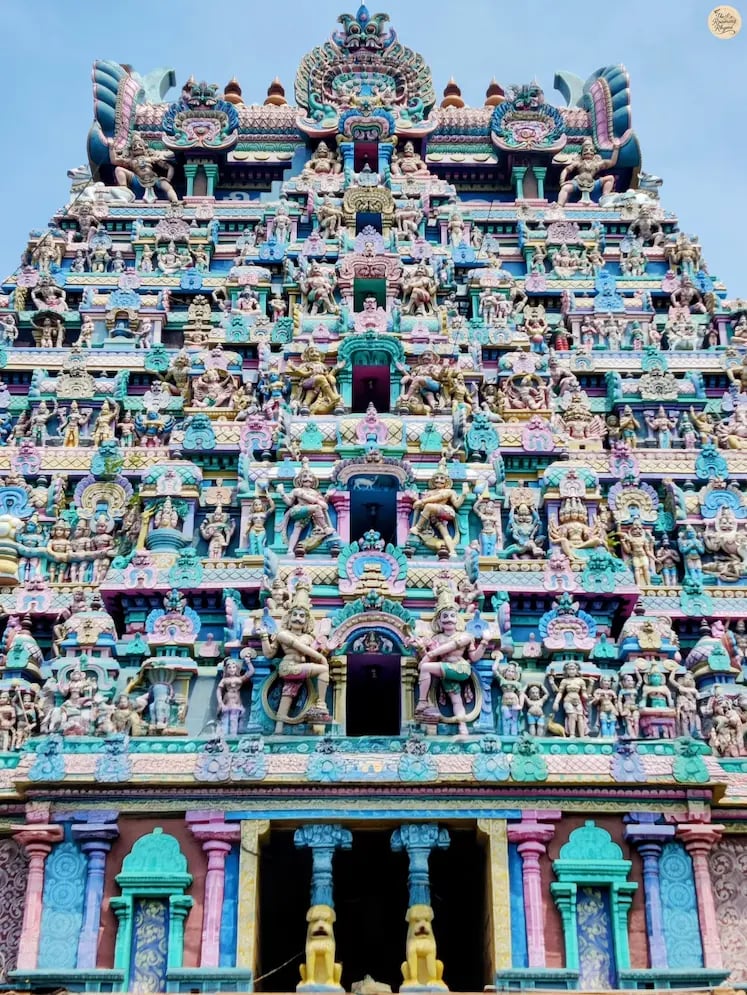
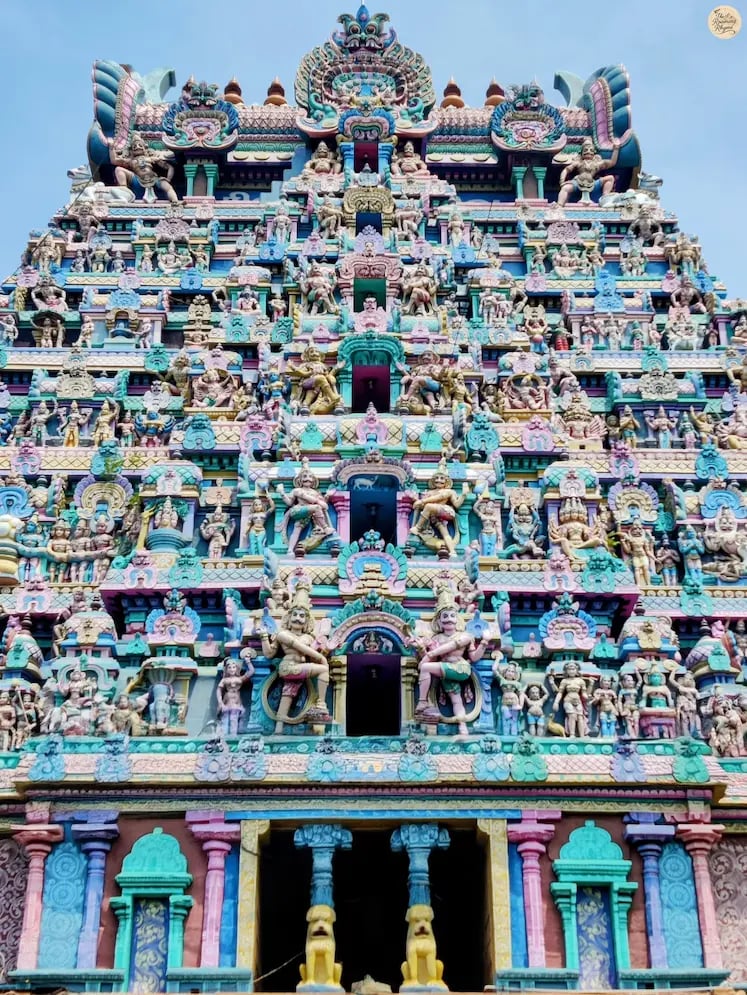
Closer to the gopuram, closer to the timeless whispers of Jambukeshwar.
Jambukeswarar Temple is one of the largest temple complexes in Tamil Nadu, spread across nearly 18 acres. It is an excellent example of Dravidian-style architecture↗. Originally built by King Kochengot Chola↗ in the early Chola period (around the 5th–6th century CE), the temple was later expanded by the Hoysalas↗, Pandyas↗, and other dynasties.
The temple consists of five concentric prakaras (corridors), the outermost being the famous Vibudi Prakara, a 25-feet-high wall stretching for more than a mile, believed in local tradition to have been constructed by Lord Shiva in the form of a spider.
Interestingly, one of the entrances was built unusually small—only about 4 feet high and 2.5 feet wide—a design linked to the legend of the king’s past life as a spider.
The sanctum sits slightly below ground level and is surrounded by a stone window with nine holes, symbolizing the nine human orifices. Devotees offer prayers through these openings.
The Akilandeswari shrine, located in the fourth prakara, is supported by 796 ornate pillars.
The temple also boasts a magnificent 1000-pillared hall, with monolithic stone pillars engraved with zodiac signs, chains, and intricate carvings.
The gopurams (towering gateways), including a seven-tiered Rajagopuram, add to its grandeur.
The temple is also home to a temple car (Coratham) used for processions and several traditional wooden vahanas. Inscriptions from the Chola↗, Hoysala↗, Vijayanagara↗, and Nayak↗ dynasties provide historical evidence of patronage and renovations.
Architecture of Jambukeswarar Temple – A Dravidian Masterpiece
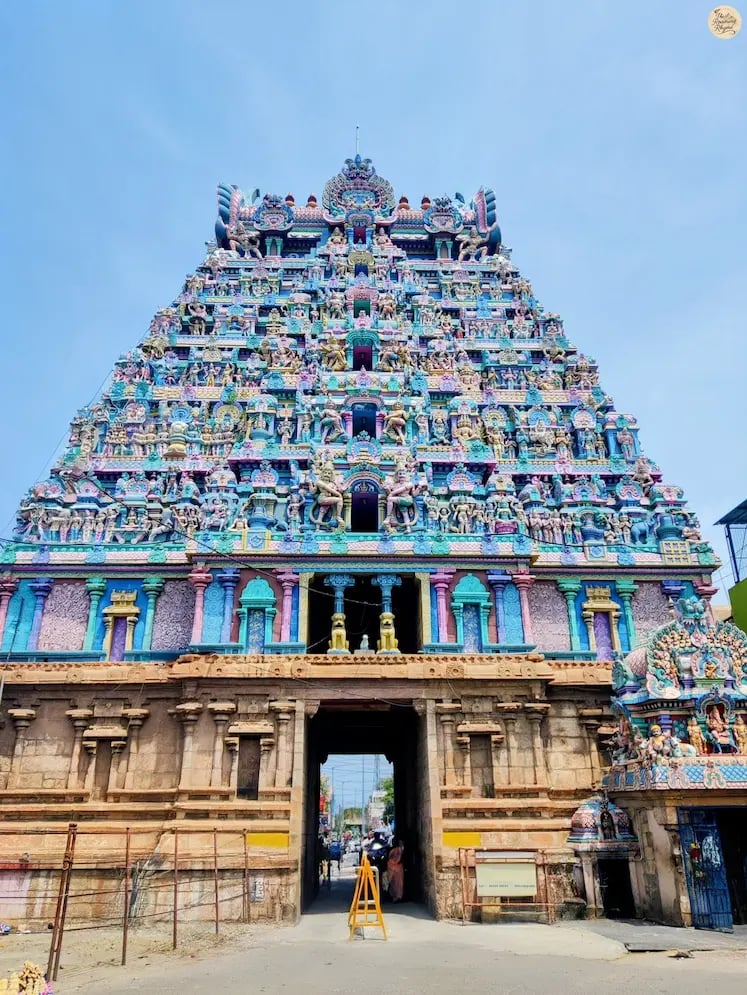
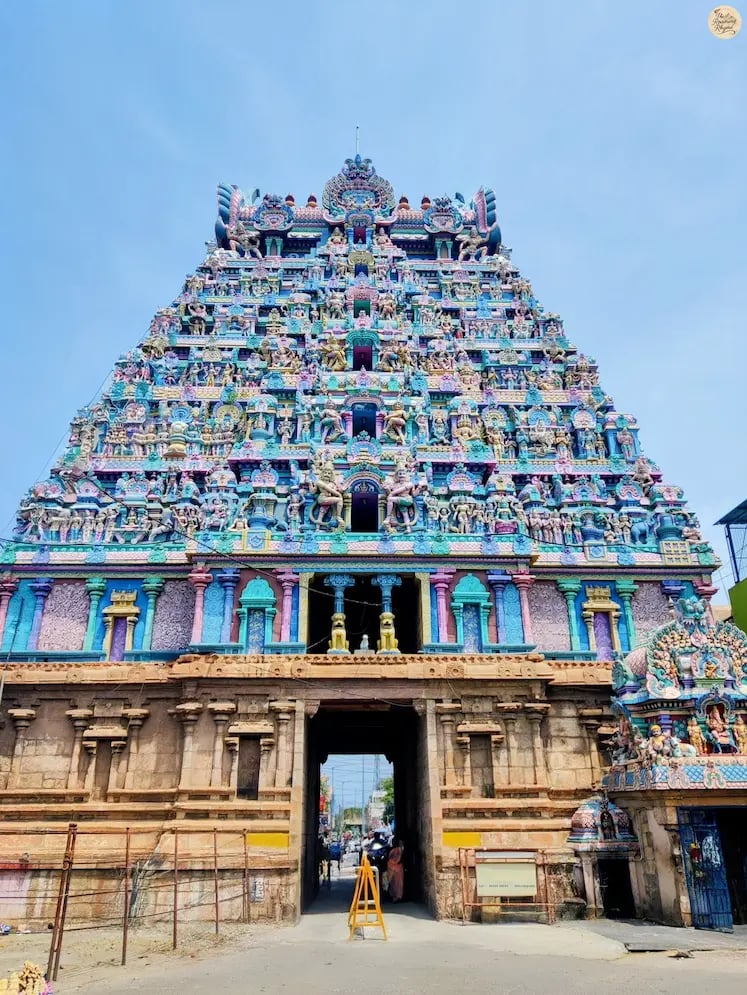
The towering gopuram of Jambukeshwar Temple – where legends rise as high as the stones.
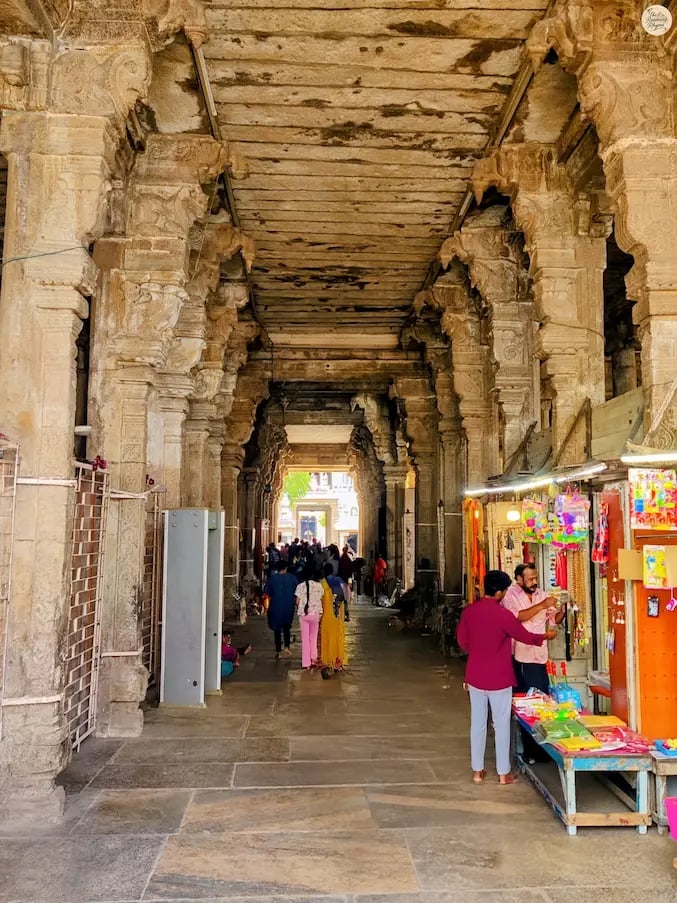
Through the grand corridor, devotees walk into the morning light of Jambukeshwar.
Fascinating Facts about Jambukeswarar Temple
The Lingam is always surrounded by water.
Inside the sanctum, the Shiva Lingam is continuously fed by a natural underground spring. Even when the water is cleared, it slowly seeps back, symbolizing the temple’s connection to the water element (Appu) among the Pancha Bhoota Sthalams.A unique daily ritual representing Goddess Parvati.
During the midday worship, the temple priest performs the ritual dressed in a sari. This tradition symbolizes Goddess Akilandeswari worshipping Lord Shiva, commemorating the temple's legend.Part of the sacred Pancha Bhoota alignment.
Jambukeswarar Temple is one of the Pancha Bhoota Sthalams, representing water. These temples dedicated to the five elements are believed by many devotees to share a remarkable geographical alignment across South India.
A visit to Thiruvanaikaval Jambukeswarar Temple is not just about architecture or rituals – it’s about experiencing one of the most powerful symbols of spirituality in Tamil Nadu. With its connection to the Pancha Bhoota Sthalams, sacred legends, and mysterious water Lingam, this temple leaves every traveler with a sense of awe.
If you are exploring Srirangam↗ and Trichy travel destinations, make sure this ancient wonder is part of your itinerary.
Frequently Asked Questions – Jambukeswarar Temple
Q. Why is Jambukeswarar Temple famous?
A. The Jambukeswarar Temple is famous as one of the Pancha Bhoota Sthalams, representing the water element (Appu). The Shiva Lingam inside the sanctum is naturally surrounded by water from an underground spring, making it one of the most unique temples dedicated to Lord Shiva in South India.
Q. What are the Jambukeswarar Temple timings?
A. The temple is generally open from 5:30 AM to 1:00 PM and 3:00 PM to 8:30 PM. Timings may vary during festivals, special poojas, and temple events, so it is always advisable to check locally before planning your visit.
Q. Is Jambukeswarar Temple one of the Pancha Bhoota Sthalams?
A. Yes. The temple represents the water element among the five sacred Pancha Bhoota temples of Lord Shiva in India. The constantly moist sanctum and the natural spring around the Lingam symbolize the presence of water.
Q. Where is the Jambukeswarar Temple located?
A. The temple is located in Thiruvanaikaval, near Sri Ranganathaswamy Temple, in the Tiruchirappalli (Trichy) district of Tamil Nadu, India.
Q. What is the distance between Srirangam Temple and Jambukeswarar Temple?
A. The temple is about 3 km from Sri Ranganathaswamy Temple in Srirangam↗, and the drive usually takes around 10–15 minutes. Many pilgrims visit both temples on the same day.
Q. Can Srirangam Temple and Jambukeswarar Temple be visited together?
A. Yes, both temples are located very close to each other near Trichy, making it easy for pilgrims and travelers to visit them in a single trip.
Q. Who built the Jambukeswarar Temple?
A. The temple was originally built by the early Chola kings around 1,800 years ago. Later rulers such as the Pandyas, Hoysalas, and Vijayanagara kings expanded the complex and added several halls, towers, and corridors.
Q. What is the best time to visit the Jambukeswarar Temple?
A. The best time to visit is between October and March, when the weather in Tamil Nadu is more pleasant. Festivals like Maha Shivaratri and temple celebrations also make this a special time to visit.
Q. What is the dress code for Jambukeswarar Temple?
A. While there is no strict dress code, visitors are expected to dress modestly. Clothing that covers the shoulders and knees is recommended out of respect for the temple’s traditions.
Q. Are phones allowed inside Jambukeswarar Temple?
A. Mobile phones are generally not allowed inside the temple premises. Lockers are available near the entrance where visitors can safely deposit their phones before entering.
Share Your Thoughts – We’d Love to Hear From You!
Every journey is better when shared.
We hope you enjoyed this travel story — now, we'd love to hear yours! Share your experience, suggestions, or feedback and help us make our travel tales even better.
Tracing poetry on paths unknown.
Join The Journey
© 2026 The Roaming Rhyme. All rights reserved.


Some links may be affiliate links. If you purchase through them, I may earn a small commission — at no extra cost to you.
Explore
Travel stories, guides, and hidden gems — delivered gently to your inbox.